
Owning the Marketing Website for a Post-Purchase SaaS
parcelLab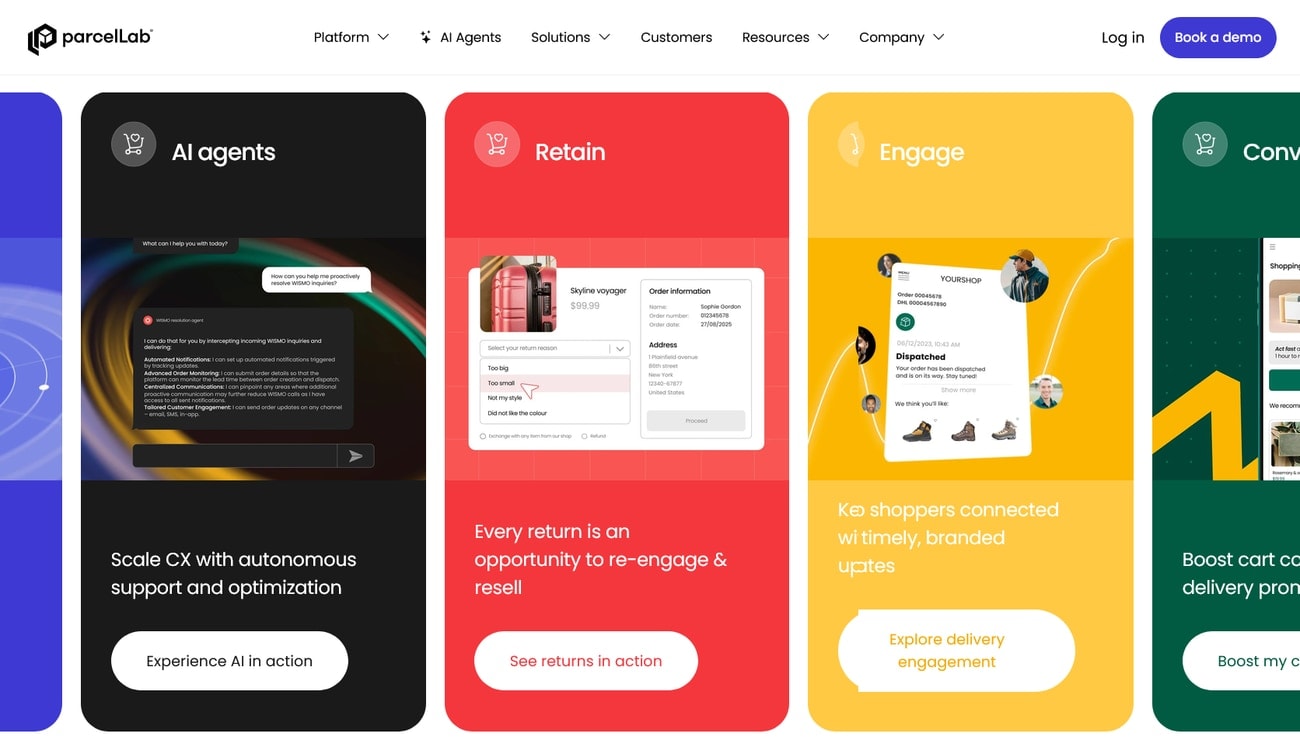
As Website Owner for parcelLab’s SaaS marketing site, I owned the site end to end across WordPress, HubSpot, analytics, and campaigns. I built custom Gutenberg blocks and an AI-assisted workflow. Marketing could then create low-code CMS drafts without engineering support.
The Challenge
parcelLab’s marketing site had to support product launches, demand-gen campaigns, and sales demo booking on a shared WordPress platform, while staying aligned with HubSpot and analytics. Marketing needed faster page iteration without waiting on engineering for every landing page, and integrations had to stay reliable as campaigns and product messaging changed.
Website Owner on a SaaS Marketing Site
The remit ran from roadmap through frontend and backend delivery to performance, CRO, and HubSpot / analytics connectivity. I worked with design and demand gen to keep the site release-ready for campaigns and launches.
What I Did
- Built and maintained a 500+ page site: product pages, landing pages, and 36 custom Gutenberg blocks for campaigns and launches.
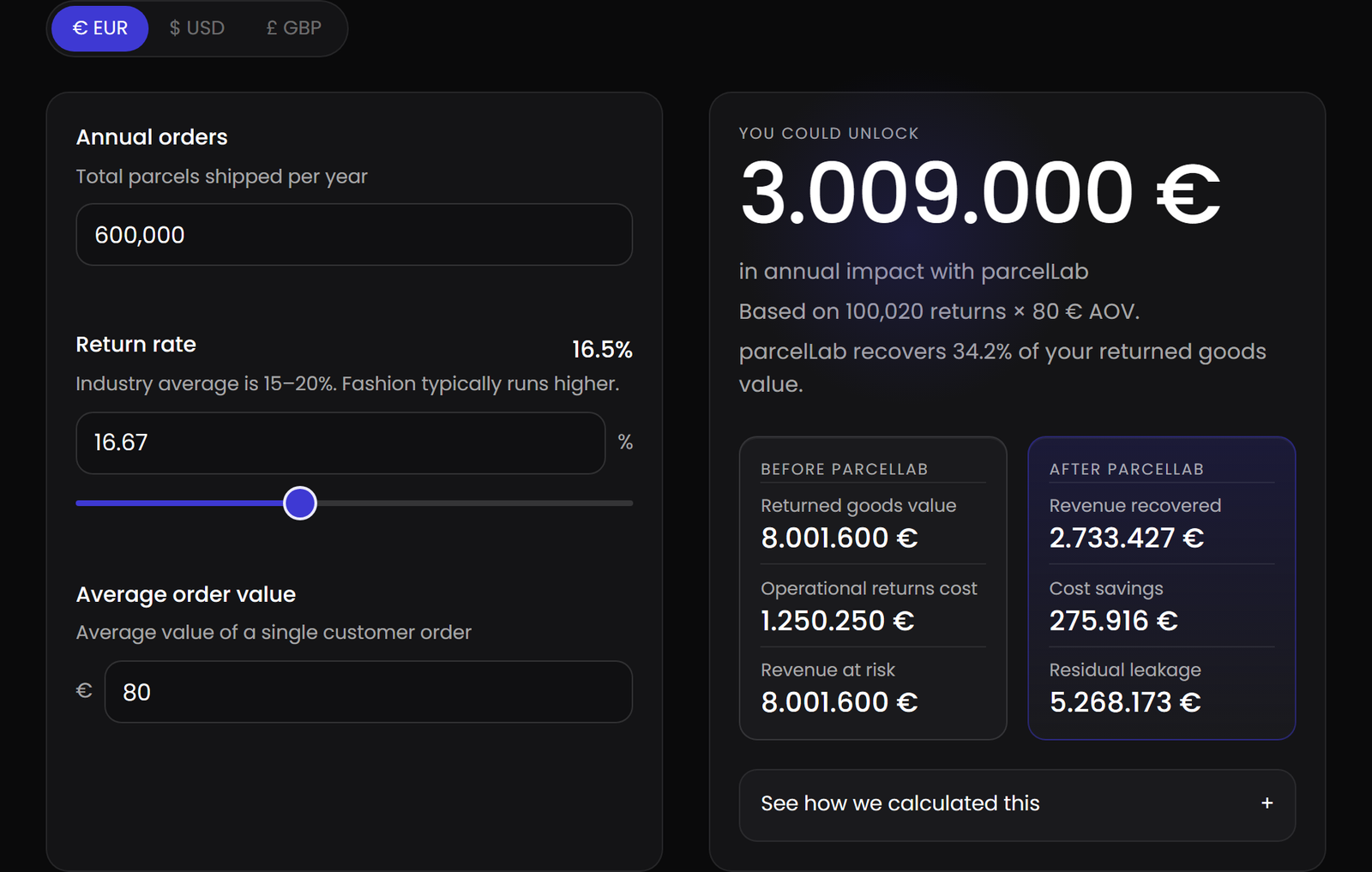
- Built the Returns Leak Calculator for demand gen, prototyped in Claude Code and shipped on WordPress.
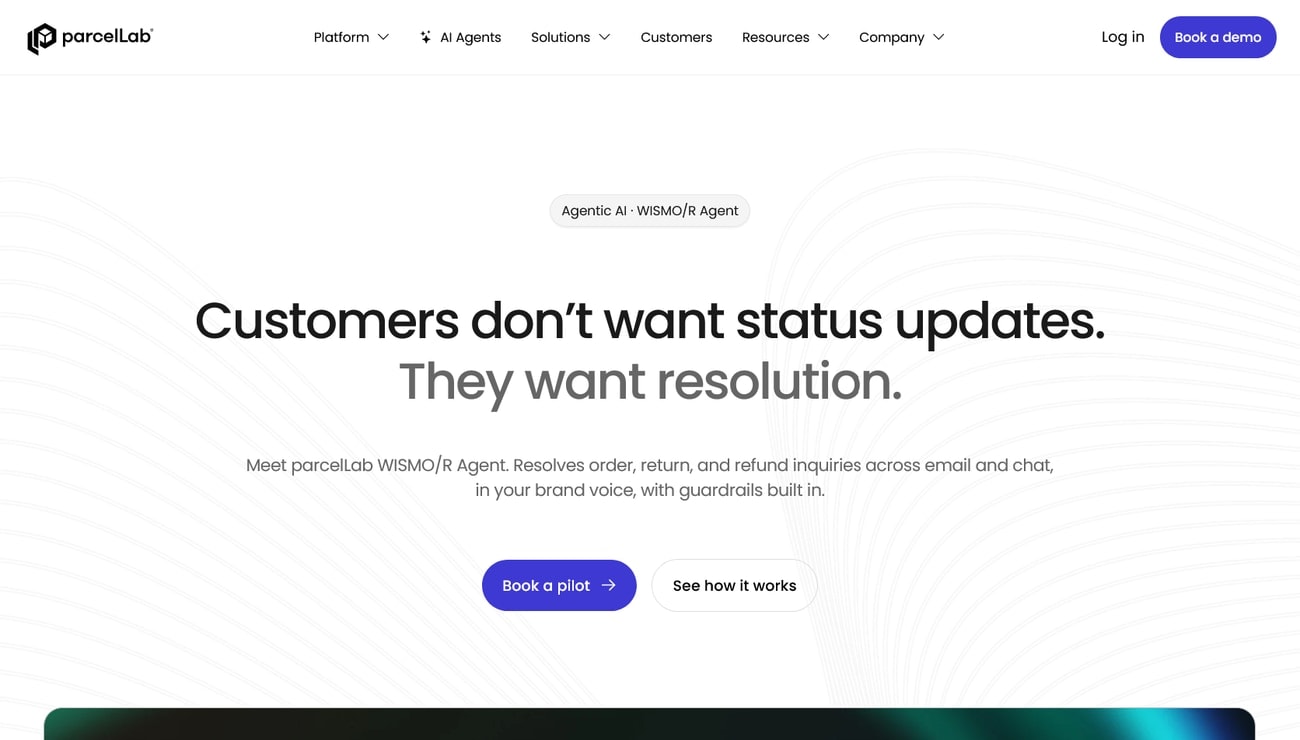
- Shipped the WISMO/R Agent launch page with Book-a-Pilot form flow and HubSpot automation, timed to product go-live.
- Redesigned demo booking as a native HubSpot + WordPress flow with SDR round-robin assignment, WordPress admin controls, and email branching across both market regions.
- Developed AI-assisted page workflows (PLPB) with Claude Code, LiteLLM, WP-CLI, and 14 MCP servers so prototypes mapped to production Gutenberg blocks.
- Led a hands-on marketing workshop where the team built first-draft pages with shared prompts and design-token rules.
- Integrated HubSpot, GA4, and GTM for analytics, lead routing, and CRM connectivity.
- Tightened experimentation guardrails with performance checks before homepage experiments stayed live.
- Ran A/B tests and Core Web Vitals work on key templates.
- Ran website QA before releases and wrote checklists so marketing could ship after platform changes.
Results
- Raised the site’s page speed score from 65 to 90 through frontend and CMS optimization.
- AI-assisted landing page delivery (PLPB) cut turnaround from 2 days to 2 hours.
- Demo booking moved off an expiring third-party scheduler onto an owned HubSpot + WordPress stack.
- The new flow shipped on deadline and brought in its first qualified lead within days.
- The Returns Leak Calculator is live and used in paid social, at events, and in sales conversations.
- Marketing drafts first-pass landing pages on the AI-assisted workflow instead of waiting on engineering.
- HubSpot, GA4, and GTM stayed wired correctly through successive campaign and product launches.
What I Learned
Marketing website ownership is systems work, not just page production. When block vocabulary, design tokens, and HubSpot / analytics integrations are explicit, marketing and engineering can ship faster without trading away quality. The same thinking runs through the ForEveryone Berlin design system, where that shared vocabulary is the deliverable instead of a side effect.